Bay Area Host Committee Announces Super Bowl LX Exceeded Economic Impact Projections, Generating Approximately $720 Million for Bay Area Region
Post-Event Report Shows Bay Area Tripled its Impact from Super Bowl 50, Creating Significant Economic Benefits Across the Region with Bay Area Workers Earning More Than $300 Million
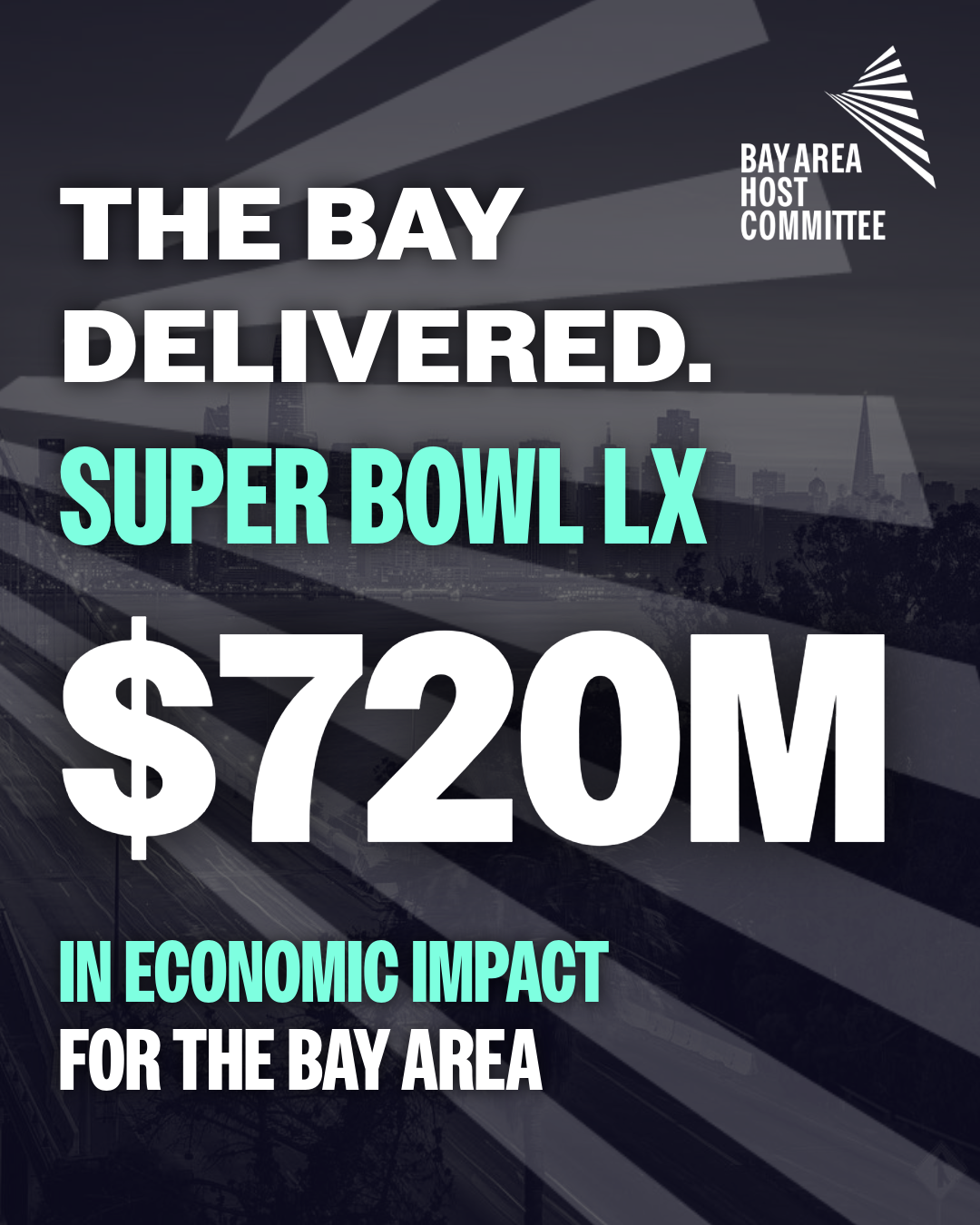
MOUNTAIN VIEW, CA – June 4, 2026 – The Bay Area Host Committee (BAHC) today announced the official post-event economic impact from Super Bowl LX, revealing that the event generated an estimated ~$720 million in total economic activity for the Bay Area region — exceeding initial 2024 projections, tripling its impact from Super Bowl 50, and demonstrating the substantial value of hosting the nation’s premier sporting event.
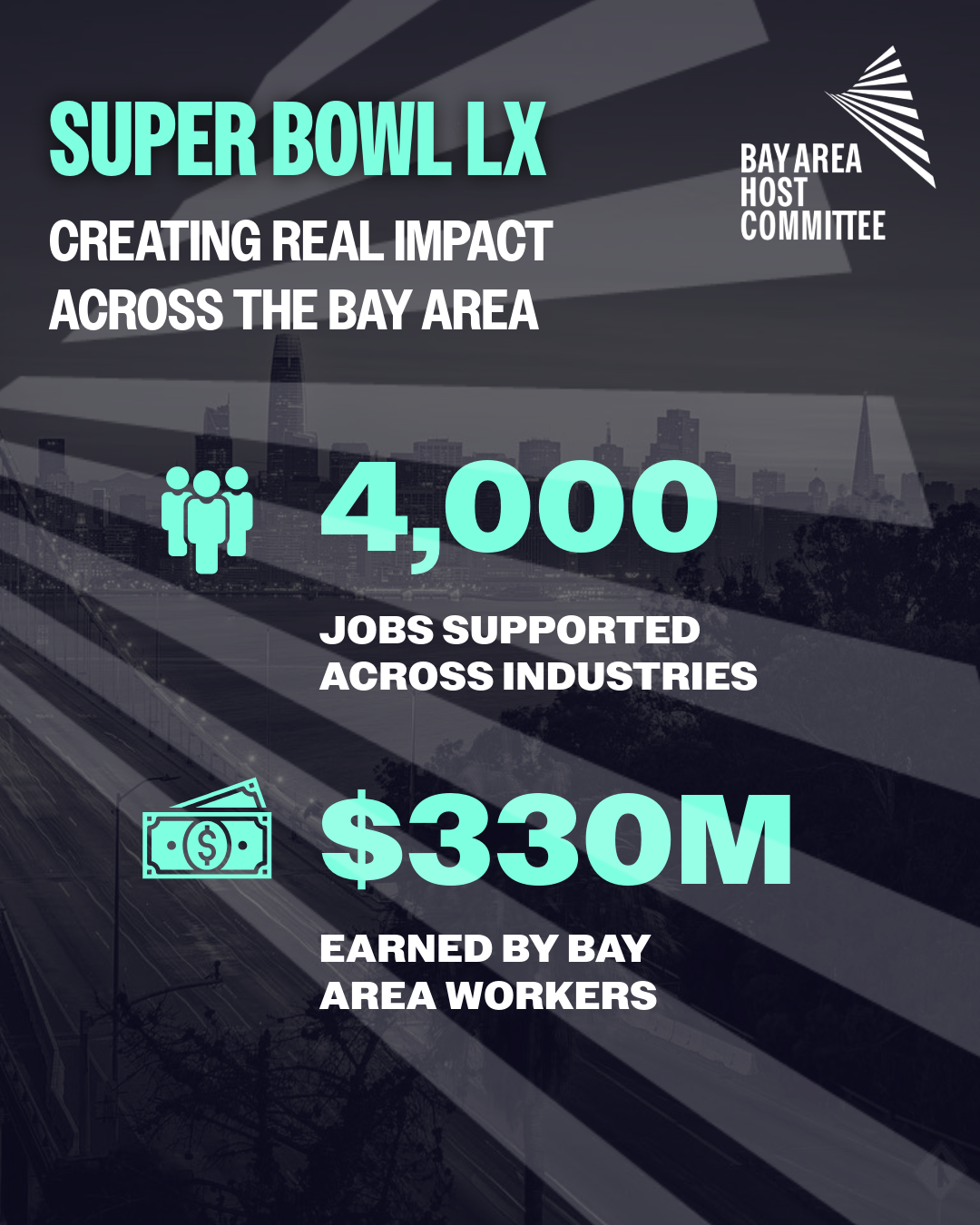
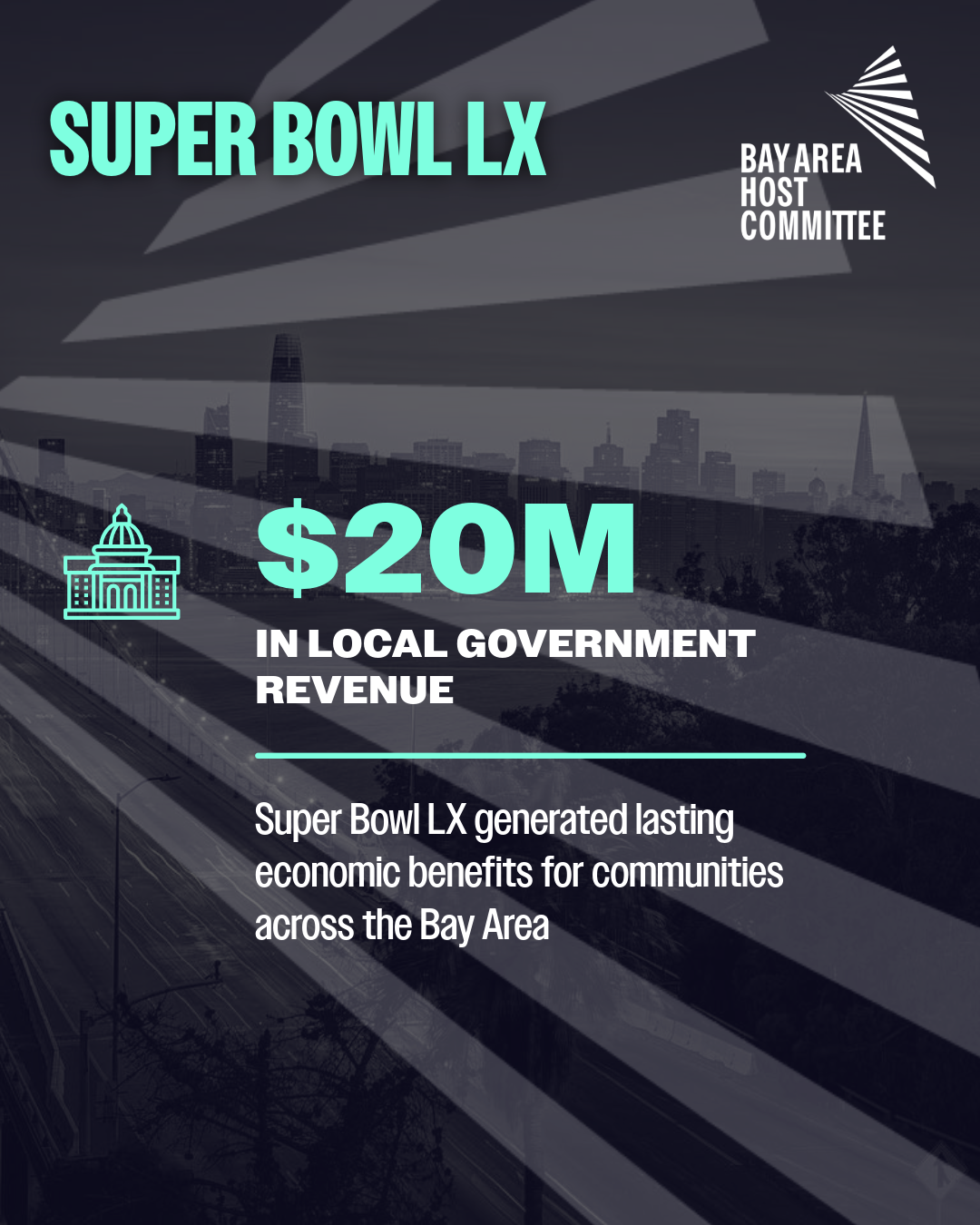
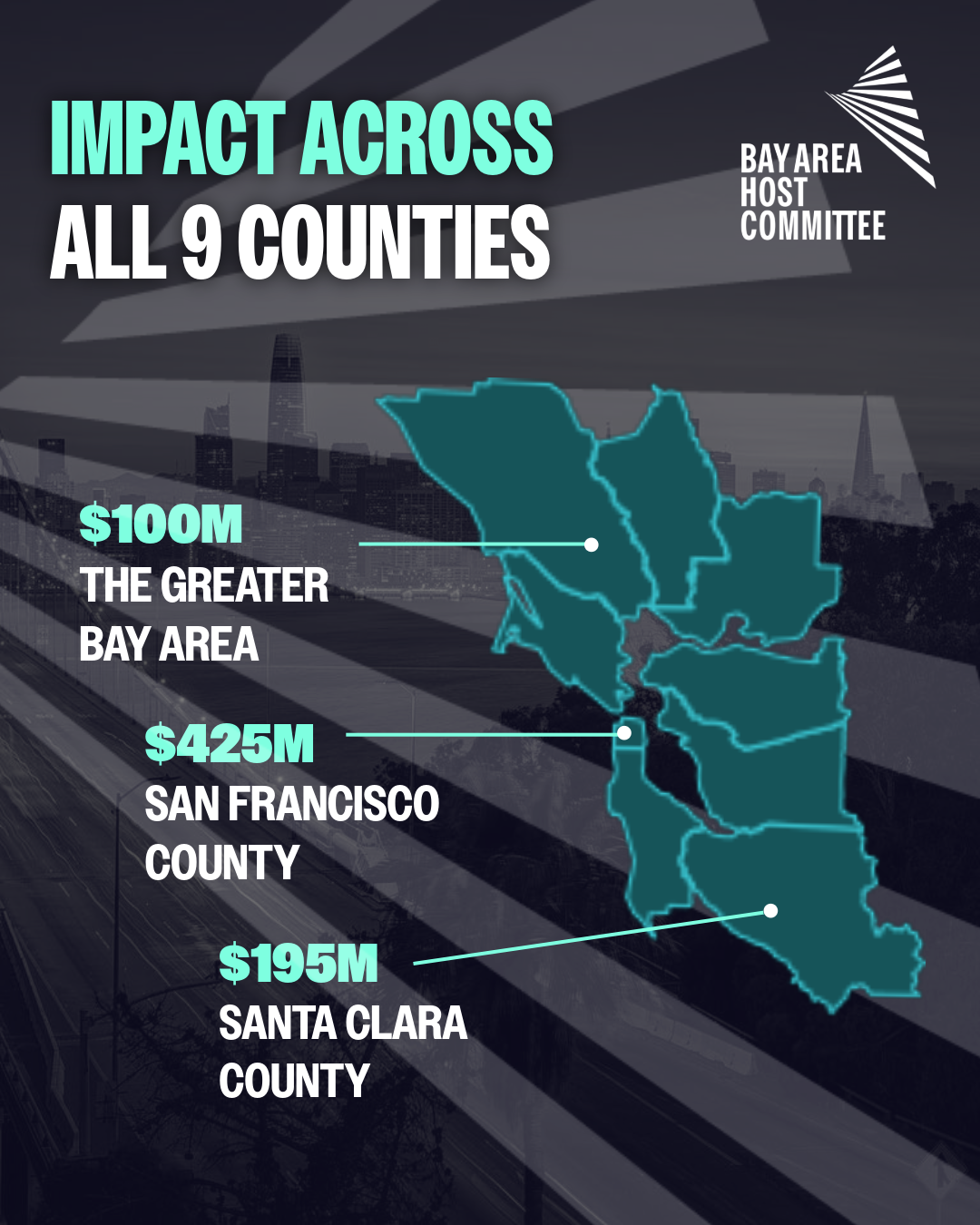
The analysis -- developed by global management consulting firm Boston Consulting Group (BCG) on behalf of BAHC -- shows economic benefits distributed across the region, with San Francisco County capturing approximately $425 million, Santa Clara County approximately $195 million, and the greater Bay Area counties approximately $100 million. The results also reflect positive impacts on Bay Area workers and local government coffers, with approximately $330 million in labor income and $20 million in fiscal revenues to local governments.
“Super Bowl LX was truly a transformational event for the Bay Area," said Zaileen Janmohamed, President & CEO of the Bay Area Host Committee. “We’ve demonstrated that the Bay Area’s world-class infrastructure, hospitality, and business ecosystem can deliver meaningful economic benefits that extend far beyond game day. The ~$720 million in impact represents real jobs, real wages, and real investment in communities across our entire region — including all nine counties of the Bay.”
The BAHC’s June 2024 pre-event report projected a regional economic impact range of $370-630 million. The post-event estimate of ~$720 million reflects three key factors:
Increased Visitor Spending: Visitors spent more per day than initial projections assumed based on updated tourism spending patterns. Updated data from Bay Area tourism organizations and the NFL showed that daily visitor spending has risen steadily across the region in recent years, reflecting the high demand for experiences in the market and around the event.
Wider Regional Reach: Economic benefits spread further across the Bay Area than previously modeled. Counties beyond the immediate event areas – including Alameda, Contra Costa, Marin, Napa, San Mateo, Santa Cruz, Solano, and Sonoma, captured an estimated $100 million in economic impact — a significant increase from initial projections. This reflects how visitors are spending money across the Bay Area and how the interconnected nature of the Bay Area economy works today, with supply chain, logistics, and workforce increasingly distributed across the region.
Higher Wages Across the Region: Wages and salaries increased for workers across the Bay Area driven by Super Bowl-related spending, resulting in total estimates earnings of $330 million. Increased visitor expenditure drove a rise in labor income, as higher demand for hospitality, retail, and service sector activity translated directly into expanded wage and salary payments for local workers.
“We knew Super Bowl LX was a success in the Bay Area, but this economic impact is a true testament to the incredible work and collaboration that took place during our biggest event of the year,” said Peter O’Reilly, NFL executive vice president of club business, international and league events. “The Super Bowl is not only the pinnacle of sports and entertainment, but also an incredible driver of positive economic impact for local businesses and residents. Thank you to our partners at the BAHC and San Francisco 49ers, as well as the local officials and numerous organizations across the Bay Area who created an unforgettable event that continues to leave a lasting legacy on the region.”
Super Bowl activity supported approximately 4,000 jobs across the region, a modest adjustment from initial estimates. This reflects an industry-wide trend toward increased technology innovation in tourism and hospitality services, a trend documented broadly across national tourism research. Advances in hospitality and service technology have increased output-per-work, reflecting the productivity gains shaping those industries.
The comprehensive analysis was conducted using a Multi-regional Input-Output model within IMPLAN economic modeling software that incorporates the most up-to-date Bay Area economic data through 2024.
“These results validate what we knew going in: the Bay Area is one of the world’s great destinations,” added Al Guido, CEO of the San Francisco 49ers. “What mattered most to us was making sure the benefits of Super Bowl LX were felt across the entire region — from San Francisco to Santa Clara and communities throughout all nine counties. That intentional approach is a big part of why this event generated three times the economic impact of Super Bowl 50. We are grateful to the Bay Area Host Committee and the NFL for their partnership in making this an unforgettable event.”
To see the complete BAHC Super Bowl LX Post-Event Economic Impact Report, click here.

About the Bay Area Host Committee
The Bay Area Host Committee (BAHC) is the region's first long-term sports entity, dedicated to uniting the Bay Area through sport by building pride, connecting communities, and reenergizing the region. As a nonprofit, BAHC partners with local teams, civic leaders, and businesses to bring world-class sporting events to the Bay Area—driving lasting economic, cultural, and social impact. BAHC is proud to have Boston Consulting Group (BCG), EA SPORTS, Kaiser Permanente, and other visionary organizations as founding partners, supporting its mission to bring communities together and create lasting legacies through world-class events and sports. For more information, visit www.bayareahostcommittee.com or email info@bayareahostcommittee.com